
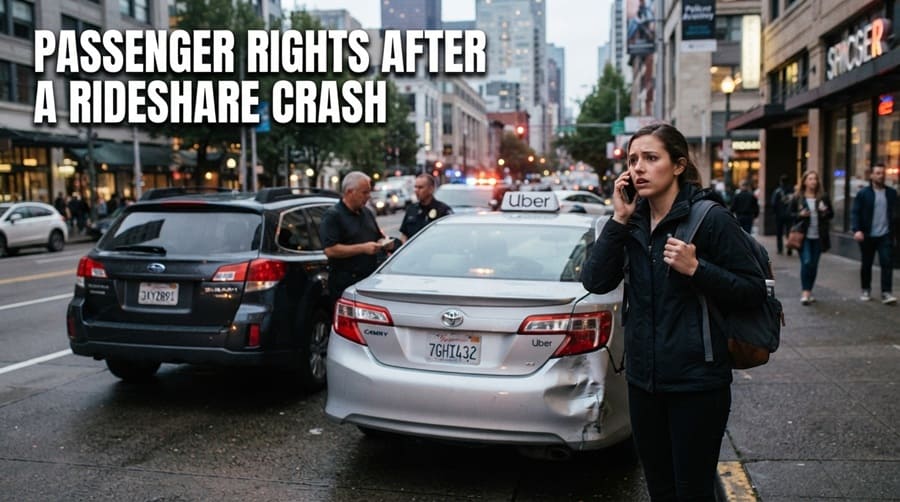
You got into the car expecting a quick, forgettable trip. Then there was the sudden jolt, the sound of metal, the confusion. Now you might be sitting at home or in a hospital room replaying it in your mind, wondering who is going to pay these medical bills, whether you should talk to insurance, if you should speak with an accident injury lawyer, and if you even have any rights as a rideshare passenger.
If you feel shaken, angry, or guilty for “not seeing it coming,” that is a very human reaction. You trusted a driver and a platform to get you from one place to another. Now your life is divided into a clear “before” and “after,” and the rules feel blurry.
Here is the short version of what you need to know. As a rideshare passenger, you usually did nothing wrong. You often have access to insurance coverage from one or more sources. You do not have to accept the first offer an insurer gives you. You are allowed to ask questions, to get medical care, and to talk with a personal injury lawyer before you sign anything.
So where does that leave you when the crash is fresh, and you are not sure what to do next?
What does it really mean to be a rideshare passenger with rights?
Rideshare apps make it feel like the company is always in control. You tap a button, a car shows up, you see a map and a photo, and everything feels organized. After a crash, that same system can suddenly feel very distant. You may only get short messages, automated emails, or a vague reference to “our insurance partner.”
The truth is more layered. Federal reviews of rideshare safety, such as those by the U.S. Government Accountability Office on safety issues in ridesharing, show that the growth of these services has outpaced many traditional rules. That does not mean you are unprotected. It means the protections can be hard to see.
Here are some of the specific challenges passengers face after a rideshare collision.
Emotional whiplash. One moment you are checking messages or thinking about your day. The next moment you are dealing with pain, fear, and uncertainty. You might also feel pressure to “shake it off” because you were not the one driving. That pressure can lead people to skip care or downplay symptoms that later turn serious.
Financial strain. Even if you have health insurance, there can be copays, deductibles, missed work, and out-of-pocket costs. If you are a gig worker or hourly employee, a few days off can set you back more than any small settlement offer will fix.
Legal confusion. Rideshare companies often classify drivers as independent contractors. That can affect which insurance policy is responsible. There may be coverage from the rideshare company, the driver, another driver, or your own policy, and each one might point the finger at another. Reports like this GAO PDF on rideshare safety and data highlight how complex the picture can be.
Because of this mix of emotions, money worries, and legal fog, you might be asking yourself a hard question. Is it even worth speaking up, or should you just move on?
Why staying quiet after a rideshare crash can hurt you
Imagine two passengers in similar crashes.
In the first case, the passenger has neck pain and headaches but assumes it will go away. They decline an ambulance, do not see a doctor for weeks, and respond to the app with a short message like “I’m okay.” Later, when the pain worsens, the insurer argues that something else must have caused it or that it is “minor” because there are no early records.
In the second case, the passenger gets checked out the same day. They describe every symptom, even if it feels small. They follow up with their doctor. When the insurer calls, they are careful; they do not guess about fault, and they eventually speak with a personal injury lawyer who understands rideshare passenger compensation rights. Their medical story is documented from day one, so it is harder to dismiss.
These two stories show why your early choices matter. They also show why this is not simply about being “tough” or “letting it go.” It is about protecting your future health and your ability to pay for it.
Research on transportation safety, including work shared through the National Transportation Library such as this rideshare and safety report, suggests that crashes are underreported and that many people never assert their rights. That silence benefits the companies and insurers, not you.
So what can you actually do, in practical terms, without turning your life into a legal battle you never asked for?
Should you handle a rideshare injury claim alone or get help?
There is no single right answer for everyone. Some passengers recover quickly and have low medical bills. Others face surgery, long-term pain, or permanent changes in what they can do. One way to think about your options is to compare trying to manage everything on your own to working with a personal injury lawyer who handles rideshare accident passenger claims.
| Issue | Handling It Yourself | Working With a Personal Injury Lawyer |
| Understanding which insurance applies | You rely on what the rideshare app or insurers tell you. It may be incomplete or framed to reduce payouts. | Lawyer checks all possible policies, including rideshare coverage, private auto insurance, and your own benefits. |
| Medical documentation | You schedule your own care and may not know which records or phrases matter for a claim. | Lawyer guides you on documenting symptoms, treatment, and how injuries affect work and daily life. |
| Time and stress | You answer repeated calls, forms, and requests for statements while trying to heal. | Lawyer handles communications with insurers so you can focus on recovery. |
| Negotiating a settlement | You may not know what your claim is truly worth or how future costs add up. | Lawyer uses experience and data from similar cases to push for fair value, including future losses. |
| What you risk | Accepting too little, too soon, or saying something that gets used against you. | Paying a fee from the recovery if there is one, in exchange for guidance and advocacy. |
Government observers have noted in reports like this GAO review of transportation safety data that passengers often do not understand how to navigate these systems. You are not expected to become an expert overnight. You are allowed to ask for help.
Three steps you can take right now to protect yourself
-
Get thorough medical care and keep a symptom journal
Even if you walked away from the crash, schedule a full medical evaluation as soon as you can. Tell the provider that you were in a rideshare collision and describe every symptom, from stiffness and headaches to anxiety or trouble sleeping. Some injuries, especially to the neck, back, or brain, can take time to show themselves.
Then keep a simple daily journal. Note your pain levels, missed work, activities you cannot do, and any emotional changes. This is not just for a claim. It helps your doctors see patterns and adjust treatment.
-
Be cautious in what you say to insurers and the rideshare company
You can report that a crash happened, confirm basic facts like date, time, and location, and share contact information. Be careful about guessing who was at fault, downplaying your pain, or agreeing to give a recorded statement without understanding your rights. You do not have to accept a quick offer on the spot. You are allowed to say you want time to think or to speak with a personal injury lawyer first.
-
Learn your options before you sign or settle
Before you sign any release or final settlement, pause. Ask yourself whether you know the full picture of your injuries, your future medical needs, and your lost income. Once you sign, you usually cannot go back, even if your condition worsens.
Talking with a personal injury lawyer who understands passenger rights after a rideshare crash does not commit you to a lawsuit. It gives you a clearer view of your choices. Many injury lawyers offer free consultations and work on a contingency fee, which means they are paid from any recovery, not up front.
Moving forward after a rideshare crash
A rideshare collision can make you feel small in the face of big companies, apps, and insurers. You might be tempted to minimize what happened because you do not want conflict or drama. Your health and your future are not “drama.” They are the core of your life.
You are allowed to take your injuries seriously. You are allowed to ask questions. You are allowed to seek medical care, to keep records, and to reach out to a personal injury lawyer before you sign anything.
You did not cause this situation, but you do have choices in how you respond. One careful step at a time is enough.
Contact an Attorney in Florida
Weber Injury Law
7710 Massachusetts Avenue
New Port Richey, Florida 34653


