
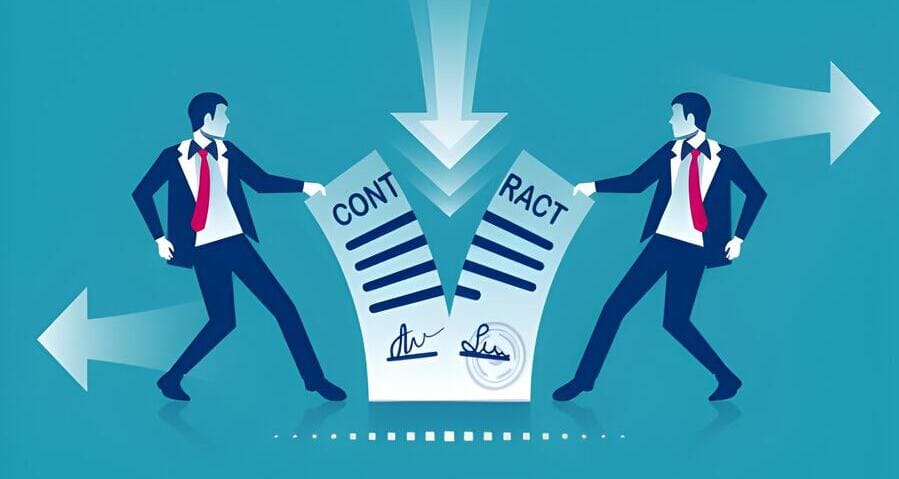
When one party fails to honor a contract, the consequences can ripple through both business and personal relationships. Missed deadlines, unpaid invoices, or incomplete work often result in serious financial losses. A breach of contract occurs when one party fails to perform as promised without a valid legal excuse. Courts across the United States apply similar rules for deciding these disputes, and understanding them can help you prepare. This article highlights the elements you must prove, the evidence that often makes the difference, and the defenses you may face in court.
Understanding Breach of Contract
Every enforceable contract begins with the basics: an offer, acceptance, consideration, and a lawful purpose. Without these elements, there is nothing for a court to enforce. Courts often describe this as requiring a “meeting of the minds,” meaning both parties agreed on the same essential terms.
A breach occurs when one party fails to fulfill its obligations. This can include refusing to pay, delivering defective goods, or failing to complete services within the agreed-upon timeframe. Not all breaches are equal. A material breach strikes at the heart of the agreement. For example, if a vendor fails to deliver any goods, the contract’s purpose is defeated. A minor breach, such as a short delay, may not excuse the other party from performing but can still lead to partial compensation. Courts evaluate the nature of the breach to determine remedies, which can range from monetary damages to specific performance.
Legal Standards You Must Meet
To succeed in a breach of contract case, the plaintiff must typically prove four elements:
- A valid contract existed. This requires showing that the agreement met the legal requirements of offer, acceptance, consideration, and legality.
- The plaintiff performed their obligations or had a lawful excuse not to. Courts will ask whether the plaintiff fulfilled their promises under the agreement.
- The defendant failed to perform. This involves clear proof of missed payments, undelivered goods, or other breaches of the terms.
- The plaintiff suffered damages as a result. Lost profits, additional expenses, or other measurable harm must be shown.
The burden of proof in civil cases is a preponderance of the evidence, meaning it is more likely than not that the plaintiff’s version of events is true. This standard is lower than the “beyond a reasonable doubt” required in criminal cases, but it still demands persuasive, organized documentation. If the contract terms are vague or ambiguous, proving a breach becomes much more difficult.
Key Evidence to Strengthen Your Case
Evidence is the foundation of a breach of contract claim. The most compelling cases rely on multiple forms of proof that confirm the contract’s existence, the plaintiff’s performance, and the defendant’s failure. Examples include:
- Written contracts and amendments. Signed agreements, addenda, and follow-up communications, such as emails or text messages, establish the terms and any subsequent modifications.
- Proof of performance. Invoices, delivery receipts, service logs, and payment records demonstrate that you upheld your obligations.
- Documentation of the breach. Records of missed deadlines, defective goods, or communications acknowledging problems show how the defendant failed.
- Witness testimony and experts. Colleagues, contractors, or industry professionals can explain technical terms, confirm performance, or calculate damages in complex disputes.
Courts weigh the credibility and thoroughness of evidence heavily. Businesses that keep careful records and preserve correspondence are in a stronger position to succeed if a dispute ends up in litigation.
Common Defenses to Expect
Defendants often raise defenses to limit or avoid liability. Being prepared for these strategies helps plaintiffs anticipate challenges. Some of the most common defenses include:
- No valid contract existed. A defendant may argue that the agreement lacked consideration, was too vague, or was not properly formed.
- Contract void or voidable. Allegations of fraud, duress, or incapacity can render an agreement unenforceable.
- Impossibility or impracticability. Events outside the defendant’s control — such as natural disasters, supply chain disruptions, or new regulations — may excuse performance.
- Statute of limitations. Contract claims must be brought within a specific timeframe. In most states, contract claims must be filed within three to six years of the alleged breach of contract. For example, South Carolina requires actions within three years of the alleged breach.
By working with a skilled contract disputes attorney, you can anticipate these defenses, prepare effective counterarguments, and increase the chances of a favorable outcome.
Winning a breach of contract case depends less on courtroom theatrics and more on preparation and documentation. When the stakes involve significant financial loss or damaged business relationships, seeking legal guidance early can make all the difference. An attorney can develop a strategy tailored to your situation, guide you through the process, and protect your interests.


