
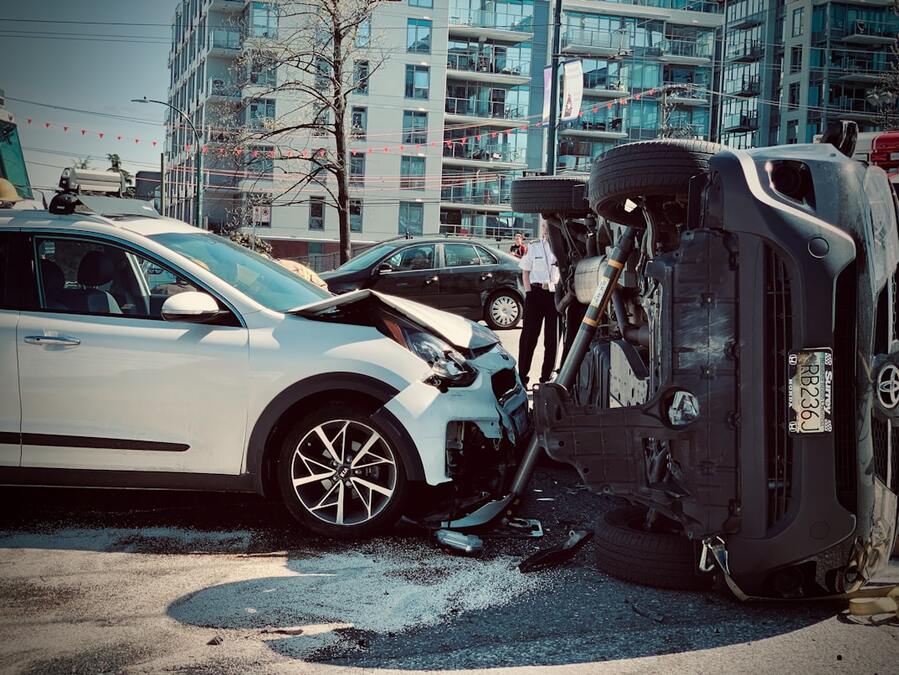
For years, modern vehicles have rolled out with a long list of advanced safety features, and the expectation has been simple: more technology should equal fewer crashes. Yet the pace of improvement has been slower than people predicted. Even though new tools like automatic braking, lane-keeping assistance, and driver-monitoring systems have been widely adopted, crash numbers remain more stubborn than expected.
In 2024, the NHTSA reported about 39,355 fatalities, giving the country a rate of 1.20 deaths per 100 million vehicle miles traveled. It is better than the early pandemic years but still higher than the 1.13 average from the seven years before COVID.
Many drivers assume new features should create more dramatic progress, so the reality feels confusing. This gap between expectation and actual outcomes is now shaping conversations regarding why crashes still happen at significant rates. Today, let’s look at a few reasons why this appears to be the case.
The Technology Does Not Eliminate Driver Behavior Problems
When it comes to safety features, it’s worth remembering that they help, but they cannot fully override human behavior. This is what remains one of the largest forces behind crash numbers. Drivers still become distracted, and many rely on safety tools more than intended, which changes how they judge risk.
Some researchers call this effect “risk compensation” because drivers behave differently when they feel protected by technology. The 2025 PARTS field study found that AEB cut rear-end crashes by 52% in model years 2021–2023, up from 46% in 2015–2017. Even with that improvement, nearly half of rear-end crashes were still happening. The feature lowers the chances of a mistake turning into a disaster, but it cannot prevent every lapse in attention or judgment.
Another problem is that many drivers treat alerts as optional suggestions instead of the critical warnings they are. Features like lane-keeping assistance and blind-spot monitoring improve awareness, yet people often tune out the sounds or ignore the lights when rushed, tired, or irritated. This is also why there are still so many auto accident cases today.
Automation Is Still Learning and Produces Its Own Set of Risks
Autonomous driving was once expected to become the biggest leap in road safety, yet real-world performance has shown that this vision needs more time. As Statista points out, in California, 1,600 vehicles were registered for autonomous driving tests. After driving 9 million miles on public roads, the vehicles experience 132 collisions or accidents. This gave it a crash rate of 14.6 per 100 million vehicle miles, implying that there’s still a long way to go with safety in these vehicles.
Sadly, these are not numbers we can just adjust to or ignore. Accidents are not just singular incidents, and most people do not have the time to deal with the entire process of mediation, investigation, and settlement that follows.
As Freeman Law Firm, Inc., notes, moderate to severe accident cases can last several months, with complex cases going even over a year to resolve. Thus, until people are more confident in either autonomous driving capabilities or other safety features, continuous and conscious attention is still needed.
Let’s be clear, the issue is not that the technology is failing entirely, but that it still makes rare but serious mistakes that humans do not expect. Many of these vehicles and features struggle in unusual or rapidly changing scenarios. This brings us to our next point.
The Safety Features Help, but They Work Best in Narrow Windows
There’s no denying that safety features have saved numerous lives and reduced the number of crashes. For instance, crash-avoidance technologies such as AEB, lane-keeping, blind-spot detection, rear-cross-traffic alert, and cameras lowered certain crash subtypes significantly.
Huge gains were seen in backing crashes, which dropped by 78%. Likewise, front-to-rear crashes with injury dropped by 56% according to numbers from the Insurance Institute for Highway Safety (IIHS).
That said, some or all of these features are not a 100% guarantee, even in the aspects they focus on. So, while AEB reduces rear-end crashes, it mainly applies to low-or moderate-speed situations with clear visibility. Put the same system into heavy fog, high-speed highway driving, or aggressive stop-and-go traffic, and the effectiveness weakens.
The same thing happens with lane-keeping and blind-spot monitoring. They lower certain crash types significantly, but they do not address broader behaviors like tailgating, sudden lane weaving, or poor decision-making around large trucks.
Essentially, modern features often work amazingly well, but their success is tied to very specific moments. When a crash scenario does not fit those conditions, the technology cannot help as much as the driver assumes. This mismatch continues to be a key reason why the national fatality rate is declining at a slower pace than expected.
Frequently Asked Questions
1. Do newer cars have better safety features?
Yes, newer cars definitely come with stronger safety features. You get things like automatic emergency braking, lane-keeping, blind-spot warnings, and improved crash protection. These upgrades help reduce certain types of crashes, but they still don’t guarantee perfect outcomes because driver behavior plays a huge role, too.
2. Which safety feature is most likely to prevent a crash?
Automatic Emergency Braking is currently the most effective at preventing crashes. It steps in when a driver reacts too slowly and can cut rear-end collisions by more than half. It works best at lower speeds, but in real traffic, it’s one of the most helpful systems you can have.
3. What is the number one cause of car accidents?
The biggest cause of car accidents is still human error. Distracted driving, speeding, tailgating, and bad judgment in traffic lead to far more crashes than vehicle or road issues. Even with advanced tech in modern cars, the driver’s choices remain the strongest factor in overall safety.
At the end of the day, modern safety features are improving outcomes, but the progress is gradual because the challenges are broader than the tools themselves. As we’ve discussed, human behavior creates unpredictable conditions, and many safety tools only work within narrow limits.
So, yes, the national crash statistics reflect these realities, which is why the numbers feel stubborn even in a time of rapid technological advancement. The road is becoming safer, but the journey is slower and more complicated than early predictions suggested.


